

















How to Enable Backup Encryption
Files created during the backup process can be encrypted using an auto-generated key.
System Requirements
For MacOS, ensure that gnupg is installed in the system. Use the following command to install gnupg:
brew install gnupg
Most Linux distributions already have GnuPG installed, and the current version will likely use GnuPG 2.0 by default.
Encrypt Backup option
- Open the System Settings form.
- Inside the Backups section check the Encrypt Backup checkbox.
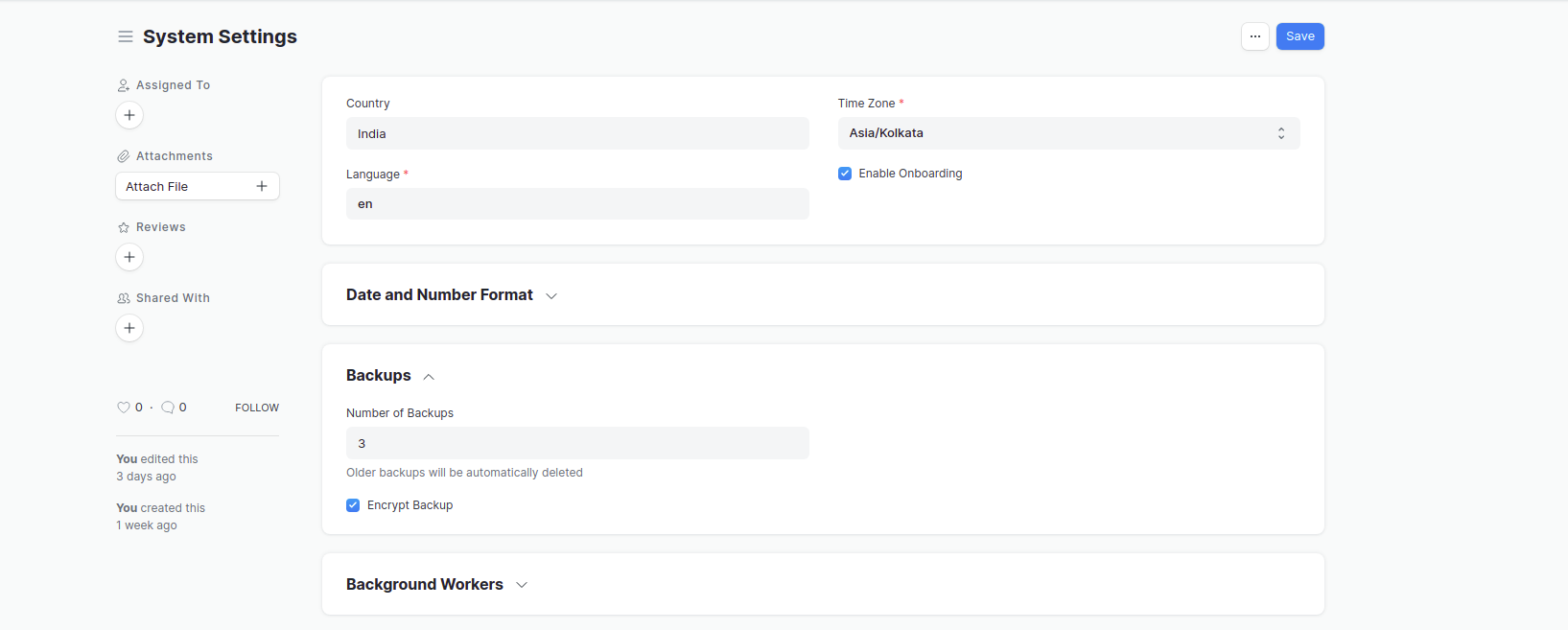
The system uses an auto-generated key supplied by the Site config. If no such key is found, a new key is generated. Any System Manager can later look it from the Download Backups page.
It encrypts the public and private files as well as the partial backup files.
Backup Encryption Status
- Encrypted backups are stored at the same location as the general backups:
YOUR_BENCH/sites/{site}/private/backups. - Encrypted backups can be downloaded from the Download Backups page.
- Encrypted backups are differentiated using the
key icon.

Backup Encryption Key
- To get the backup encryption key go to the Download Backups page.
- Click on the "Get Encryption Key" button and verify your password.
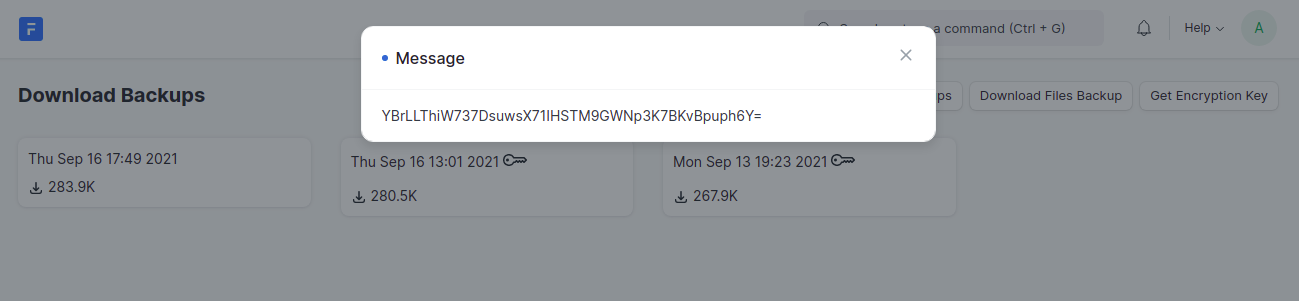
Copy the key to restore the encrypted backup files.
Restoring the Encrypted backup files
- The
bench restore SQL_FILE_PATHcan be used to restore the files without--backup-encryption-keyas it is automatically picked from the Site Config. - In case of an unsuccessful restoration due to a wrong key
--backup-encryption-keycan be used to provide the key to restore the files. - Usage:
For full backup files
bench --site {site} restore --backup-encryption-key {key} [OPTIONS]
For partial backup files
bench --site {site} partial-restore --backup-encryption-key {key} [OPTIONS]
Manually decrypt encrypted backup files
gpg --yes --passphrase $BACKUP_ENCRYPTION_KEY --pinentry-mode loopback -o $OUTPUT_FILE -d $INPUT_FILE
Last updated 4 months ago
Was this helpful?